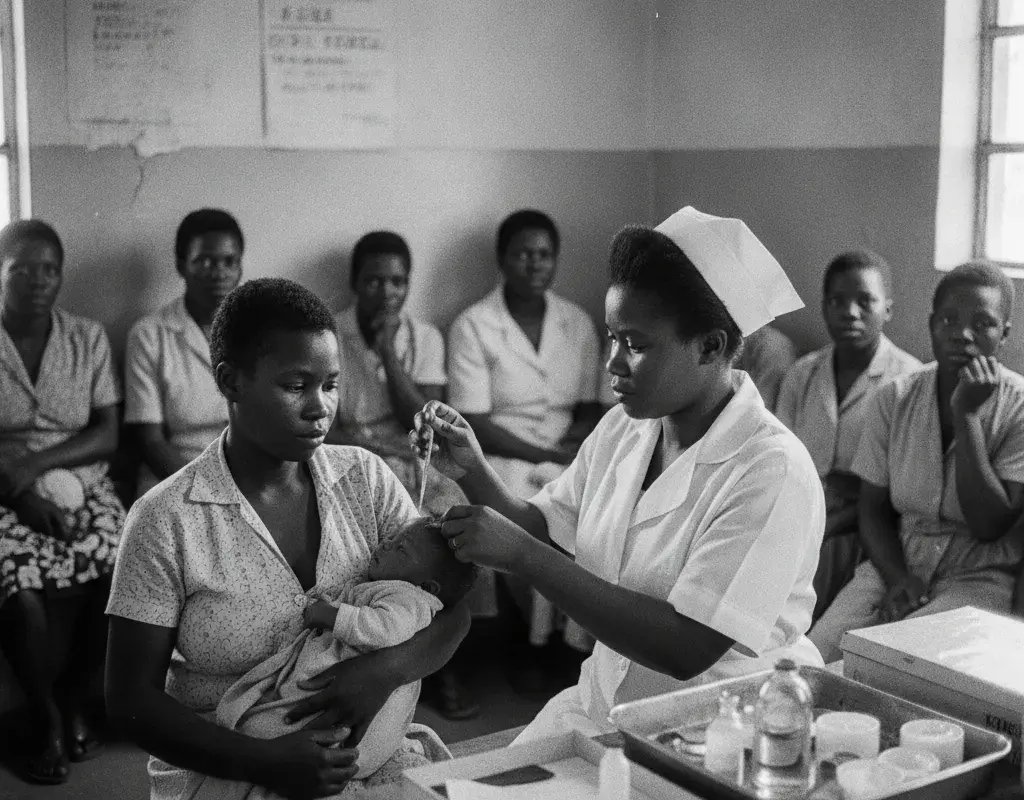
A haunting series of black and white photographs currently on display at the Bowdoin College Museum of Art offers a rare glimpse into the intersection of medicine and political struggle during South Africa’s apartheid era. The exhibit, titled Healing in Apartheid South Africa, features the work of photographer Michael Goldblatt, who spent over a decade documenting the Alex Health Clinic in the township of Alexandra near Johannesburg. From intimate shots of infants receiving polio vaccines to stark images of sanitation workers hauling buckets of human waste through streets lacking proper plumbing, the collection captures both the desperation and the resilience of a community under white minority rule.
The project was far more than a simple medical record; it served as a testament to a radical approach to community health. At a time when Alexandra was plagued by overcrowding, poverty, and systemic violence, the clinic functioned as a hub for social medicine, focusing heavily on nutrition and disease prevention. However, providing care often meant operating on the front lines of a revolution. One particularly poignant image shows workers repairing nursing quarters that had been firebombed by security forces who suspected the staff of supporting anti-apartheid movements like the African National Congress.
The exhibition has deep personal roots at Bowdoin, as the photos belong to David Gordon, a professor of history and Goldblatt’s stepson. For years, Gordon held onto thousands of negatives and prints before collaborating with curator Anne Cross to bring them to light. In an unusual academic twist, Gordon tasked his students from a course on post-apartheid identity to curate the show themselves. He wanted his students to move beyond simply looking at pictures and instead treat them as historical evidence, analyzing what the images reveal about the socio-economic conditions of the time and what remains hidden between the frames.
Beyond its educational value, Gordon views the collection as a story of healing that transcends physical ailments. By showcasing how doctors, nurses, and local residents collaborated despite oppressive laws designed to keep them apart, the exhibit highlights a collective effort to mend a fractured society. While the gallery will host these works until early 2027, Gordon hopes to eventually house the full archive at an institution like Wits University in Johannesburg, ensuring that future historians have access to this visual chronicle of survival and solidarity.